
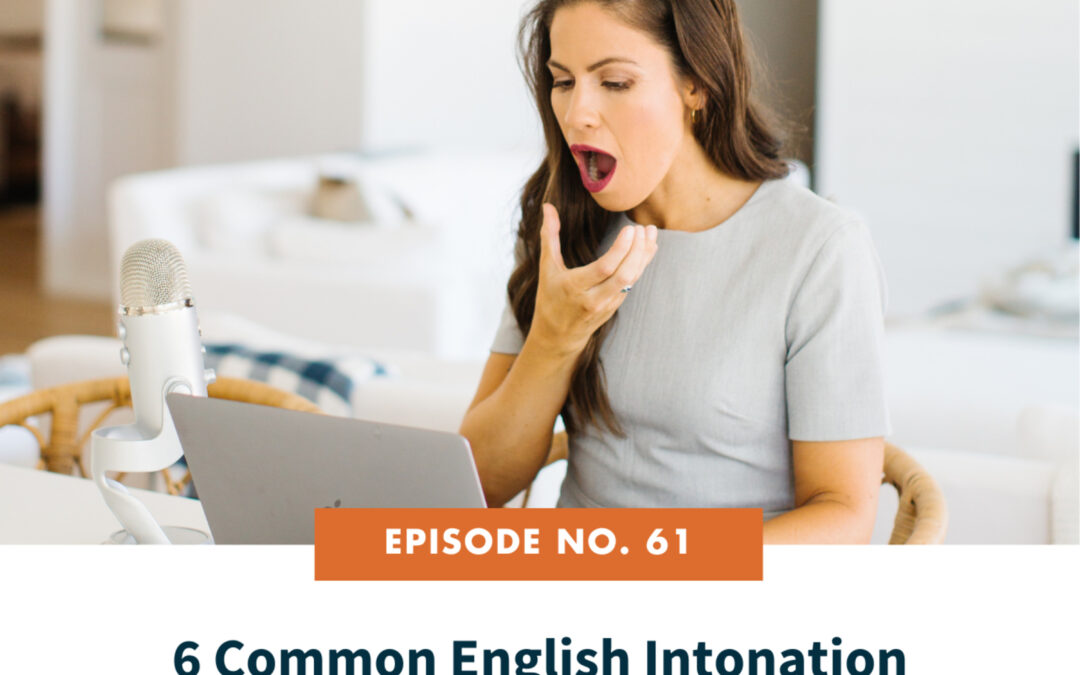
Intonation is the rise and fall of your voice. It tells the listener whether you are finishing a thought, asking a question, or stressing a word. If the tune is off, people may understand every word and still feel unsure what you mean.
These are the six English intonation mistakes I hear most from non-native speakers, and what to do instead.
What Intonation Means
Intonation is not the same as accent. Accent is which sounds you use. Intonation is the melody on top of those sounds: which words go up, which go down, and which syllable gets the beat.
American English usually falls at the end of a statement. It rises on a yes/no question. It also jumps up on the one word you want the listener to notice.
6 Common English Intonation Mistakes
1. Being monotone
A flat line makes you sound tired or unsure, even when the words are right. Move the pitch on the stressed word. Let the unstressed words stay quieter and lower.
2. Stressing the wrong syllable
DE-velop is not de-VEL-op. PHOtograph, phoTOgrapher, photoGRAPHic all move the stress. If the syllable is wrong, the word can disappear for the listener.
3. Stressing the wrong word in a sentence
“I sent the FILE yesterday” and “I sent the file YESTerday” answer different questions. Put the stress on new information, not on every word.
4. Rising at the end of statements
A rise at the end of “My name is Anita.” can sound like you are asking permission. For a finished statement, let the pitch fall on the last stressed word.
5. Not using linking or chunking
English groups words into short phrases. “Can I help you” is one chunk, not four equal hits. Link the last sound of one word into the next: help-you, look-at-it.
6. Speaking too fast
Speed hides the melody. If you rush, there is no room for stress or a final fall. Slow enough that the important word can be longer and clearer.
A 30-Second Practice
Say this statement with a fall: “I’ll send the file today.” Then the question with a rise: “Can you send the file today?” Record both. You should hear two different tunes.
For the fall at the end of a phrase, see falling intonation in American English.
Want Help With English Intonation?
Hearing the list is step one. Feedback is what makes the new tune show up in a meeting.
Pronunciation Pro helps non-native English-speaking professionals speak American English clearly and confidently, with step-by-step training and guidance from a licensed Speech-Language Pathologist.
Ready to practice? Start your 7-day Pronunciation Pro trial and start sounding clearer this week.
