
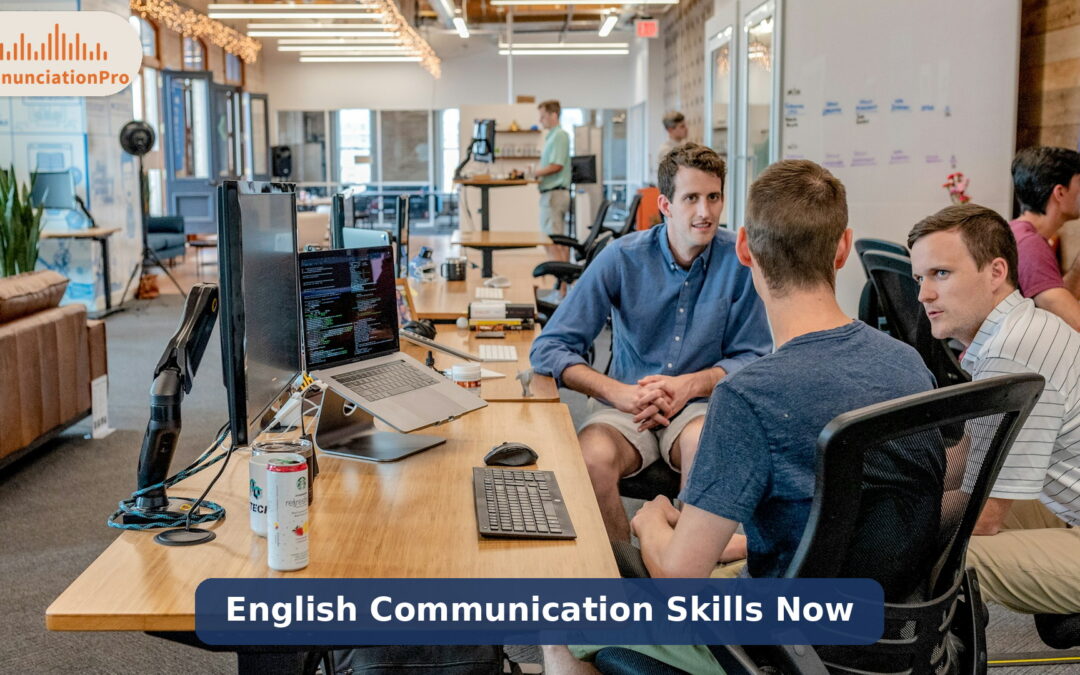
Remote rooms and global teams leave less room for guessing. Strong English communication is clarity under pressure: listen, shape the sound, deliver the point. Be Understood. Be Confident.
Many educated, non-native English speakers working in the United States are furthering their education online, not in their respective fields, but in accent reduction training. The field is a growing trend across America, especially in cities like New York and Los Angeles that have a major role in global financial markets.
With the rising role strong communication skills in English play in the job force, many employees are deciding that now is the ideal time to work on accent reduction. The term “accent reduction” is often a misnomer, as accent reduction involves learning the American accent. Letters “r” and “I” are problematic for Asians, while “v” and the “w” are difficult for Indians, who also have a mix of their own accent with a British layer overlapping.
The letter “r” for instance is a problem that branches across multiple cultures, as it can be pronounced in a variety of ways. Many non-native speakers learn to speak the right words, but never put focus onto learning the American English accent as well. This causes many individuals to not even be aware that they’re speaking incorrectly unless the problem is pointed out.
Taking the time to learn the English accent, not only allows people to speak English correctly, but also allows them to look like a leader whose ideas count. Even the most educated and brilliant of all individuals have trouble being understood if there is static in the communication flow. Through being proactive and getting involved with pronunciation courses, you can join the list of foreign-born doctors, professors and public speakers that are taking voice training and accent reduction to improve presentations, workshops and everyday conversations with their American-born co-workers.
Through accent reduction courses, participants of all educational levels are able to improve on strong communication skills and be better situated to their professional career, while benefiting social environments as well.
Strengthen your work communication with English for employers and employees, accent advice for interviews, and ways to improve fluency. Start your 7-day trial
Clear communication is a daily skill, not a one-time achievement. At work, listeners need to understand the main point, the next step, and the details that protect a project from mistakes. Slow down when a message matters, stress the key words, and use pauses to organize your thoughts. Listening carefully matters too: notice questions, confirm what you heard, and invite clarification. With regular practice, stronger pronunciation makes collaboration easier across accents, roles, and time zones.
That clarity supports trust, teamwork, and more confident participation every day.

You are welcome! We are so glad you enjoyed it!
Great, thank you for taking the time to read the articles! We are glad you find them helpful! If you would like to know about the Pronunciation Pro Course, use this link! https://wordpress-726815-2424578.cloudwaysapps.com/how-it-works/