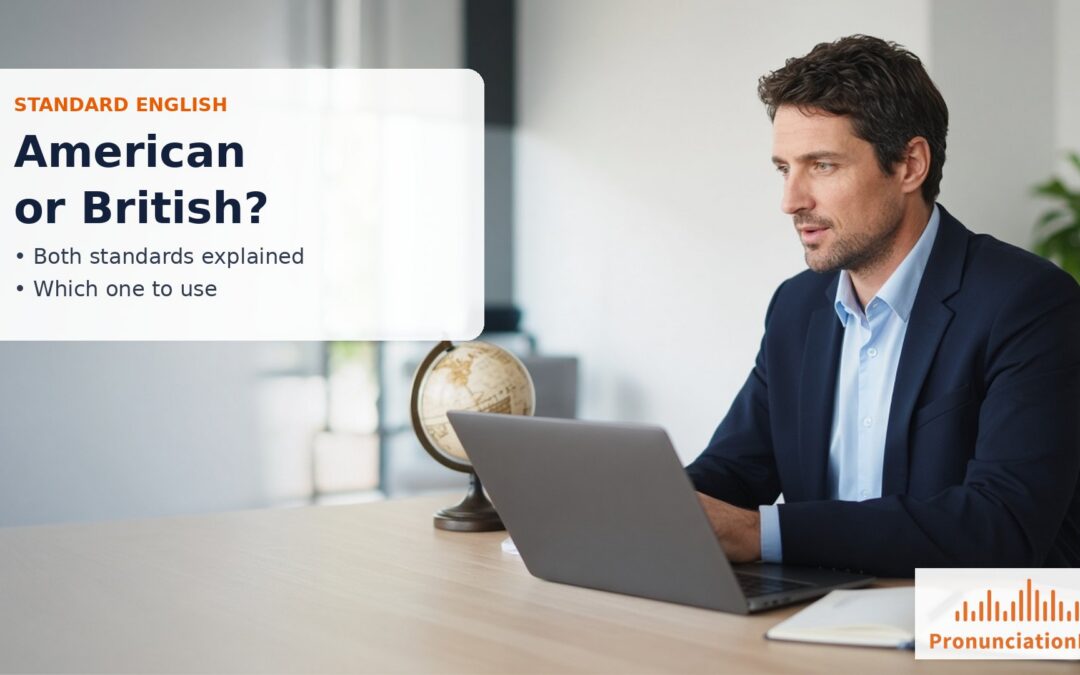
“Standard English” sounds like one official version of the language. It is not. There is no single English that every country agrees on. So is standard English American or British? The honest answer is: both. Each country has its own standard, and which one counts as “standard” depends on where you are and who you are talking to.
Is Standard English American or British?
Both. Standard American English is the model in the United States. Standard British English is the model in the UK and is still taught as “standard English” in many schools in Commonwealth countries, such as India and parts of Africa. Neither one is more correct. They are two standards of the same language, and a clear speaker of one is understood by the other.
When people say “standard English,” they usually mean the English used in school, at work, in the news, and in writing: clear grammar, common vocabulary, and pronunciation most listeners can follow. That idea exists in both countries.
What Makes the Two Standards Different?
- The R after a vowel. Most American speakers say the R in car, hard, and water. Many British speakers do not. This is the biggest sound difference, and you can read how it happened in British vs American accents.
- Some vowels and stress. The same word can sound different, like vitamin: VIT-uh-min in British English and VY-tuh-min in American English.
- Spelling. Color and organize in American English; colour and organise in British English.
- Vocabulary. Elevator and apartment in the US; lift and flat in the UK.
Grammar is mostly the same. The differences are real, but they rarely stop two clear speakers from understanding each other.
Is American English Harder to Learn?
Many learners hear that American English is especially hard. In her video, Annie Ruden, M.S., CCC-SLP, explains that English follows its rules about 80% of the time. The tricky part is that English is not spelled the way it sounds. Words like colonel (said like “kernel”) look nothing like their pronunciation. Her advice: learn how a word sounds, not how it is spelled, and be consistent.
Which Standard Should You Use?
Pick the standard you will hear and use most, then stay with it. If you work with US clients or live in North America, use standard American English. If you study or work in the UK, use British English. Switching R sounds, vowels, and spelling from sentence to sentence makes you harder to follow. One system, used consistently, is clear.
For a full guide to choosing, read American or British English: which should you learn? If you already know English from school and now need to sound clear at a US job, see why standard English matters when you apply for a job.
3 Easy Tips for Speaking Standard English Clearly
- Name your standard. American or British, choose the one used at your work, school, or in the media you watch most.
- Ear first. Listen for the R after vowels and a few common vowel differences before you speak.
- Sound, not spelling. When a word surprises you, check how it sounds and practice it out loud.
Frequently Asked Questions
Is standard English American or British?
Both. Each country has its own standard. Standard American English is used in the US, and standard British English is used in the UK and taught in many Commonwealth schools. Neither is more correct.
What is the main difference between American and British standard English?
The biggest sound difference is the R after a vowel. Most Americans pronounce it in words like car and water, and many British speakers do not. Spelling and some vocabulary differ too.
Which English is used in international business?
A lot of international business, tech, and media default to American spelling and an American sound, while many Commonwealth countries still use British standards. Use the one your workplace uses, and stay consistent.
Want Help With Standard American English?
Pronunciation Pro trains standard American English: the sounds, stress, and rhythm used in US workplaces. It was designed by speech-language pathologist Annie Ruden, M.S., CCC-SLP. Practice with our American accent training for French speakers or for Japanese speakers, start your 7-day trial, or see all Pronunciation Pro plans.
