
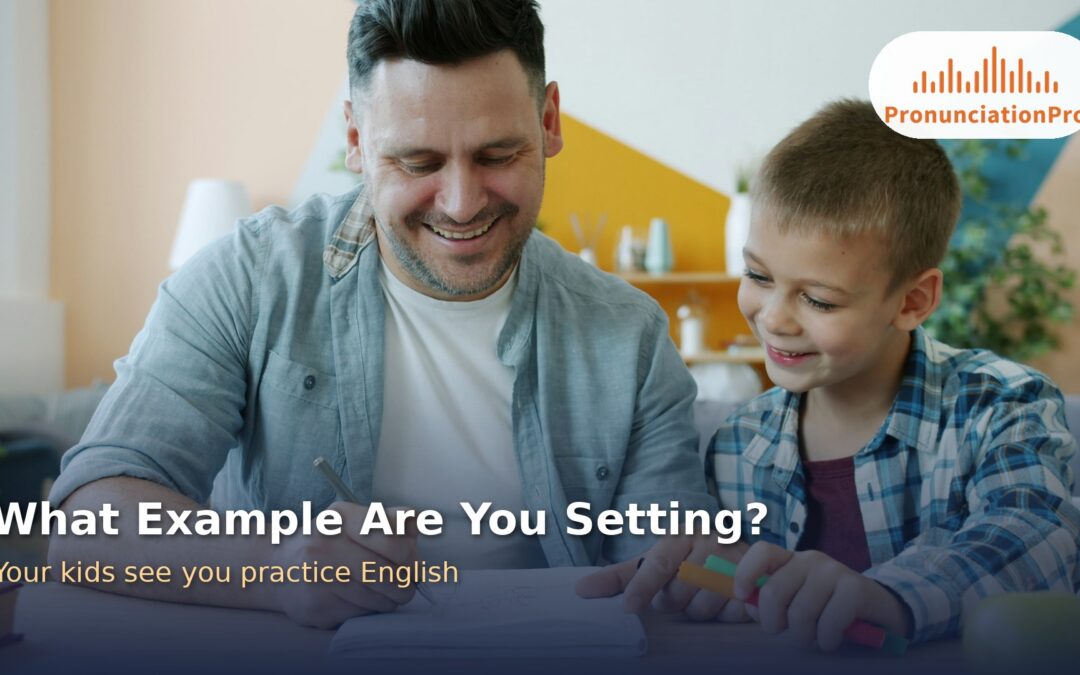
If you are a parent learning English, your children are watching how you handle something hard. In this post, I share how one student’s English practice changed the way his teenage son approached his own schoolwork. As you read, think about what your family sees when you practice.

Why your example teaches more than your words
Mohammad could have given his son another talk about hard work. Instead, his son watched him struggle with something new, keep practicing, and ask for help. That showed his son that effort matters more than talent, and that even adults with advanced degrees have to work at things that do not come easily.
Ways to let your family see you practice
- Practice out loud at home. Read a short passage or drill a sound where your kids can hear you, instead of only practicing alone.
- Ask your children for feedback. Like Mohammad, let a child who grew up speaking English listen to a word and tell you how it sounds.
- Share small wins. Tell your family when a coworker understood you the first time or a phone call went well.
- Keep a regular practice time. Ten minutes at the same time each day shows that progress comes from consistency.
Want to make practice part of family life? Learn how habit stacking keeps your English practice consistent, read how habits shape your English success, and remember to face it, work at it, love it.
